Geofencing Technology Alters Bonus Eligibility for Bettors Near Interstate Boundaries
Mara Hayes · Nov 9, 2026
Geofencing Technology Alters Bonus Eligibility for Bettors Near Interstate Boundaries
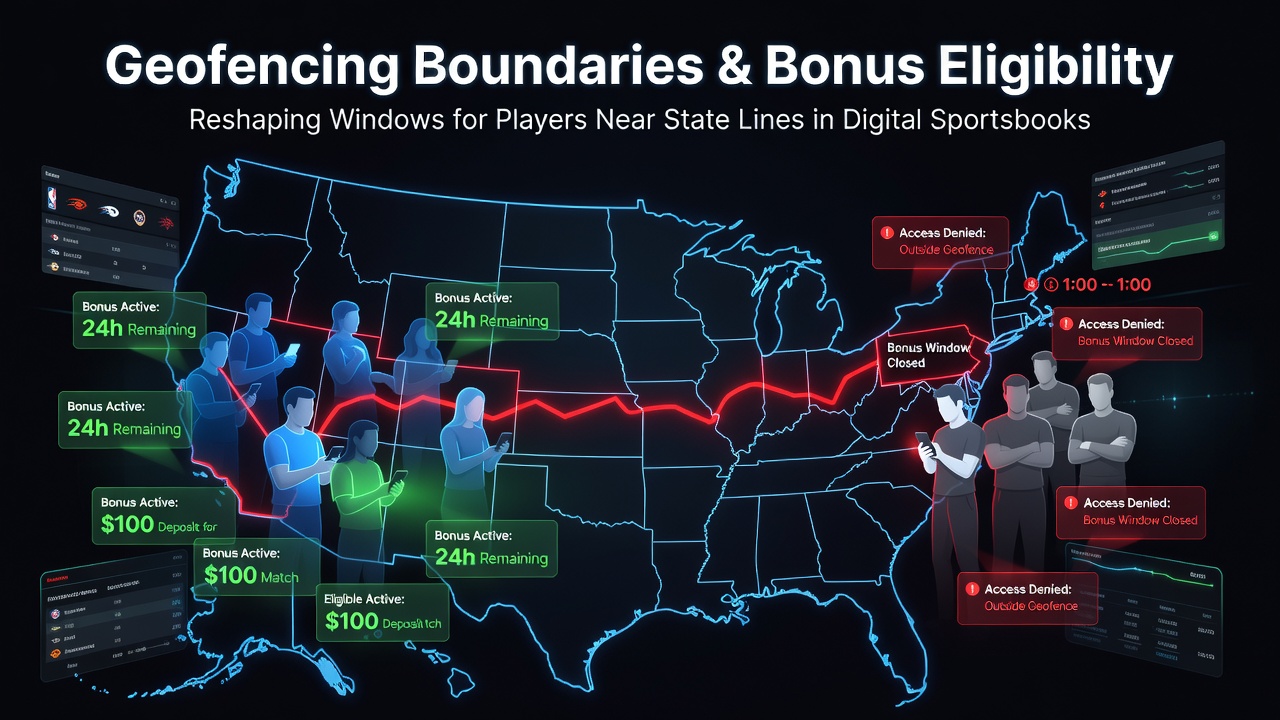
Digital sportsbooks rely on geofencing to enforce state-specific rules that determine where players can access promotional offers and claim bonuses, and this technology creates distinct eligibility windows for users located near state borders. Location verification occurs through GPS data combined with IP address checks, which means a player just a few miles from a boundary might see bonus offers appear or disappear depending on their exact position at the moment of login or wager placement. Regulatory frameworks in each state dictate separate licensing requirements, so operators program their platforms to restrict bonus promotions to users physically inside approved jurisdictions at the time of the transaction.
Operators update their geofencing systems regularly to match changes in state laws, and this process affects how long a bonus remains available once a player crosses into a new area. Data from industry tracking services shows that border-region accounts experience more frequent location pings, sometimes every few minutes during active sessions, compared to accounts deeper inside a state. Those pings can interrupt bonus claim processes if the system detects movement toward an unlicensed zone, forcing the player to complete the action before the window closes.
Mechanics of Location Verification in Bonus Systems
Sportsbooks integrate multiple data layers to confirm a user's position before unlocking promotional features, and this layered approach reduces the chance of accidental bonus awards across state lines. GPS signals provide the primary check, while IP addresses serve as a secondary confirmation that operators cross-reference with known cellular tower locations. When a player attempts to claim a deposit bonus or free bet near a border, the platform evaluates all signals simultaneously, and any mismatch can delay or block the transaction until the user moves back into the permitted zone.
Studies from university research groups have documented how these verification steps create shorter effective eligibility periods for border users, since movement detected during the claim sequence can reset the process. In November 2026, updated compliance reports indicated that several major operators adjusted their timeout thresholds from 60 seconds to 45 seconds in high-traffic border markets to align with stricter state audit requirements. Players in these areas therefore face tighter timing constraints when completing bonus-related actions compared to users in central state locations.
State Regulations and Their Direct Influence on Eligibility Windows
Each state sets its own rules for when and where bonus funds may be awarded, and geofencing enforces those rules at the account level rather than through manual review. Operators must maintain separate bonus ledgers for each licensed jurisdiction, which means a single user account can hold different promotional balances depending on the location recorded at the time of each deposit. This separation prevents bonus funds earned in one state from being used in another, and it requires users near borders to monitor their current position before initiating any promotional activity.
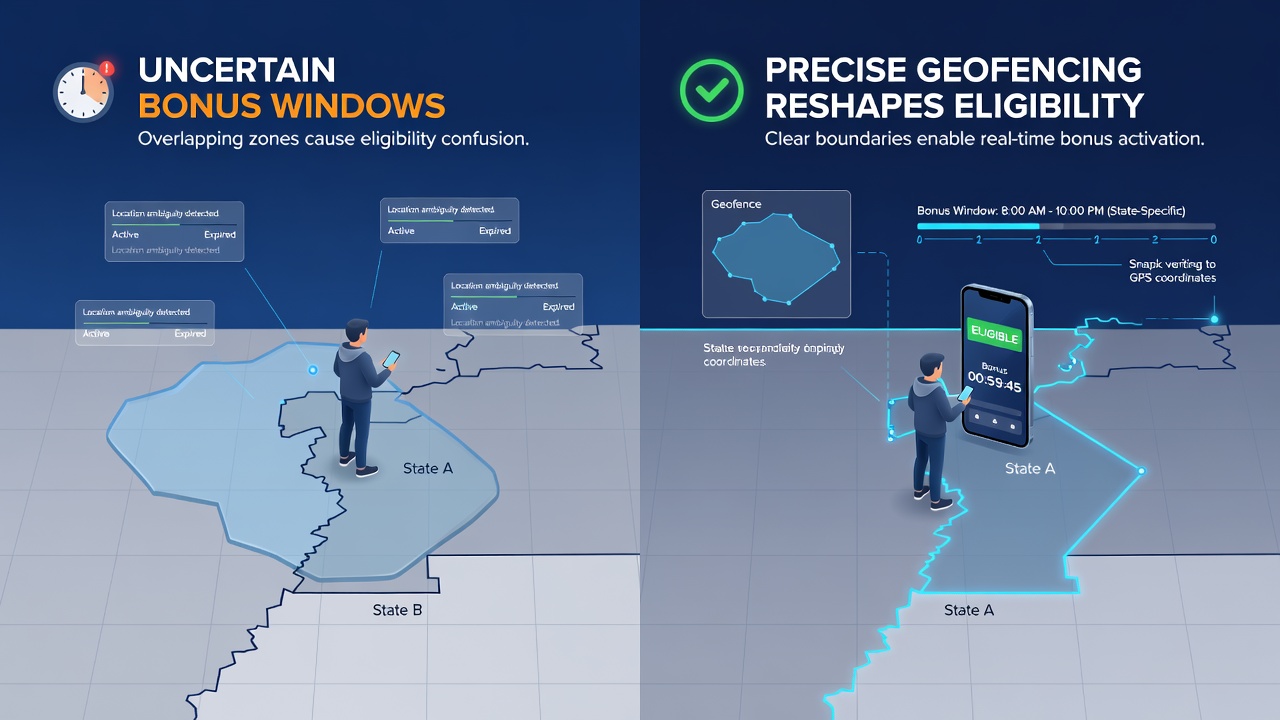
According to figures released by the American Gaming Association, border counties in states with legalized sports betting recorded higher volumes of location-related bonus rejections in the first three quarters of 2026 than non-border areas. The data indicates that operators respond to these patterns by displaying real-time eligibility banners that update based on the player's detected state, giving users a narrow window to act before the offer expires or the account switches to the rules of the adjacent jurisdiction.
Practical Effects on Players in Border Regions
Individuals living within a few miles of state lines often encounter shifting bonus availability that depends on their precise location at login, and this variability requires them to plan promotional activity around their daily movements. Some platforms allow users to set location preferences in advance, yet the final verification still occurs at the moment of the transaction, so any travel between states can close an open bonus window immediately. Industry reports from research firms tracking digital wagering show that border users complete fewer bonus-related actions per session on average, largely because repeated location checks interrupt the process before completion.
Operators have introduced notification systems that alert players when they approach a boundary while a bonus claim remains pending, and these alerts give users a brief period to finish the required steps. Data indicates that such features reduce incomplete claims in border markets, although they do not eliminate the underlying constraint created by differing state licensing rules. Players who frequently cross lines for work or travel therefore manage multiple bonus timers that activate or deactivate based on their current physical position.
Conclusion
Geofencing continues to define the practical boundaries of bonus eligibility in digital sportsbooks by tying every promotional action to verified location data at the time of the event. State regulations supply the framework that operators translate into software rules, and the resulting system produces shorter, more variable eligibility windows for users near interstate borders. As location technology and regulatory requirements evolve through late 2026, the interaction between these elements shapes how border-region players access and complete bonus offers across licensed platforms.